
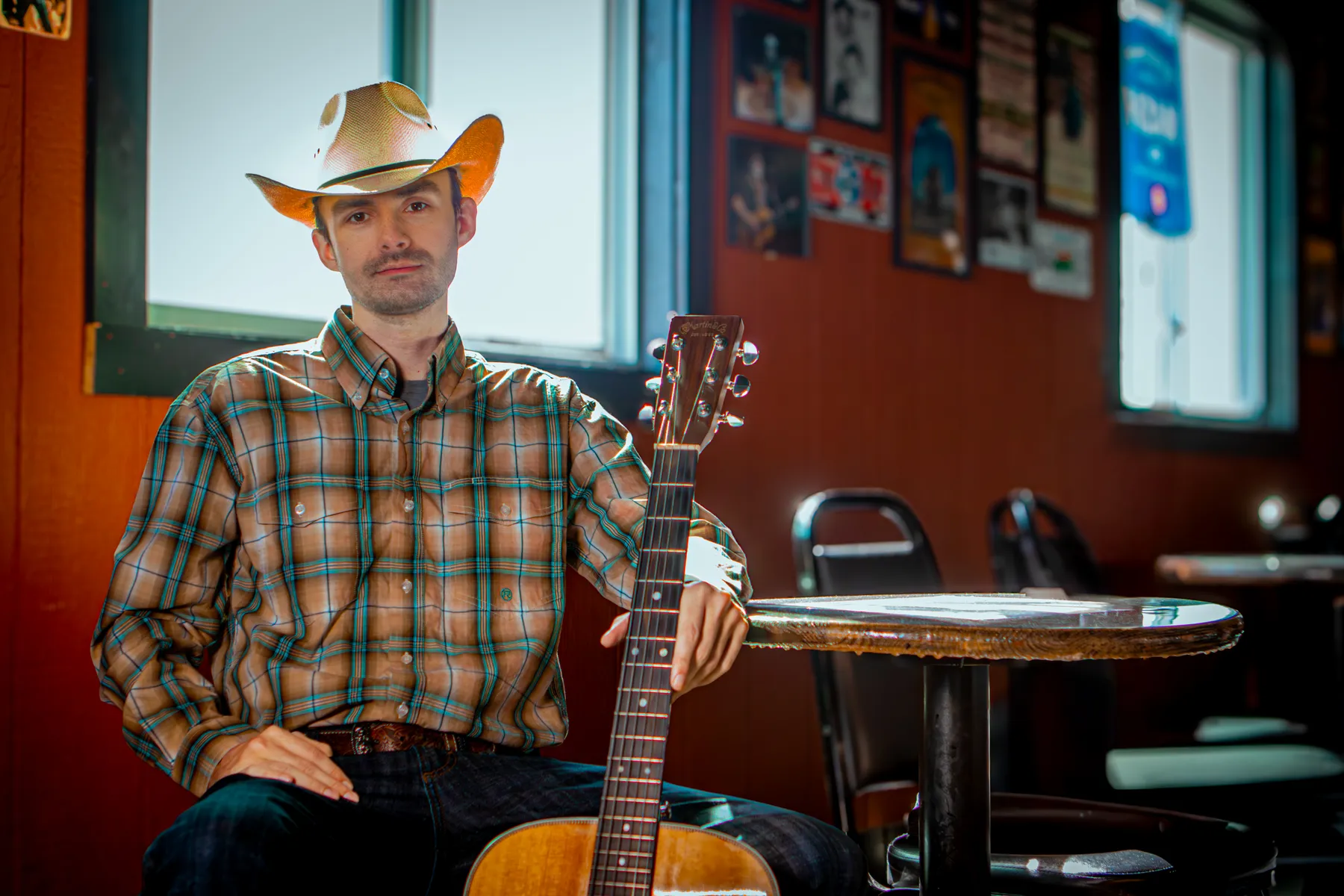
Joe Hott’s self-titled album arrives with homegrown confidence. It isn’t a reinvention or a concept record—it’s a clear-eyed declaration of identity from an artist who understands where he comes from and sees no reason to sand down the edges. Rooted in Appalachian country, bluegrass, and gospel, the record feels less like a modern revival and more like a continuation of a conversation that’s been going on in the hills for generations.
URL: https://joehott.com/
From the opening notes of “Trouble I Feel,” Hott’s commanding baritone sets the tone. It’s a voice that carries weight without theatrics, steeped in lived experience rather than affectation. The song’s 13-week run at #1 on the Roots Music Report Traditional Bluegrass Chart makes sense—this is traditional bluegrass delivered with conviction and clarity, the kind that resonates equally with longtime purists and newer listeners looking for something real. “Just Another Lonesome Day” follows in kind, leaning into restraint and emotional honesty, letting melody and phrasing do the heavy lifting.
Hott has long been praised for his devotion to classic country, bluegrass, and gospel, and this album shows how naturally those traditions coexist in his hands. Songs like “Six Hours On The Cross” and “Send The Light” draw directly from the sacred music of the mountains, delivered with reverence but never stiffness. There’s no performative piety here—just a deep familiarity with faith as something lived, wrestled with, and sung about plainly. That grounding gives the gospel tracks a quiet power that lingers well beyond their runtimes.
The album’s balance of originals and carefully chosen covers reflects Hott’s musical lineage without feeling nostalgic for nostalgia’s sake. His take on “Only Daddy That’ll Walk the Line,” which debuted at #2 on the Roots Music Report chart, fits seamlessly alongside original material, reinforcing the idea that tradition isn’t a museum—it’s a living, breathing thing. “Cold Mountain Fire,” the album’s new focus track, stands out as a particularly strong moment, pairing driving bluegrass instrumentation with a sense of urgency that feels both timeless and immediate.
Backing Hott is an all-star lineup of musicians who understand the assignment. With players like Scott Vestal on banjo, Tim Crouch on fiddle, and Dennis Crouch on bass, the performances are crisp, supportive, and never showy. The instrumentation serves the songs, not the other way around, giving Hott’s voice room to anchor each track. Harmony vocals from Michael Rogers and Eddie Sanders add warmth and depth without crowding the spotlight.
There’s also something refreshing about the album’s refusal to chase trends. In an era where roots music is often filtered through crossover ambitions, Joe Hott leans fully into authenticity. It’s a quality that’s followed Hott since his early days with the Short Mountain Brothers and through chart-topping singles like “West Virginia Rail” and “Cry From the Cross.” As Eddie Sanders of True Lonesome Records notes, this album is a statement of who Hott is—and why his voice belongs in the lineage of Appalachian music.
Joe Hott doesn’t ask listeners to rediscover tradition. It simply reminds them why it never needed saving in the first place.
Chadwick Easton