
“Television is the Writer’s medium.” No adage about entertainment has ever been truer today.
While films rise and fall on their directors’ vision, and live theater’s success relies on actors’ talent and stamina, television series are the playground and canvas for writers.
And writers are the front-line storytellers. So, given the same source material, film adaptations — always more tightly constrained by time and budget — just cannot compete with a television series where the production can breathe, the characters can develop, and the message can evolve.

Long Arc Narratives
To detour briefly for background: when HBO’s True Blood premiered in 2008, it wasn’t a monster-of-the-week format; it was a huge game-changer.
The idea that a television series could spend an entire season adapting a book meant that lovers of the source material would get to truly immerse themselves in the world they’d only ever explored in their imaginations.
A season-long adaptation allows writers to introduce a complete cast of characters with deliberate detail and pacing. (Although I’m still mad that Quinn never made it to Bon Temps.)
By the time Game of Thrones (thank you again, HBO) premiered in 2011, readers could accurately predict the finale scene of Game of Thrones Season 1, the adaptation being that true to George R.R. Martin’s first book in the series, Khal Drogo’s character notwithstanding.
Movie adaptations, even franchises that split the narrative into Part One and Part Two, simply do not have the bandwidth to tell the story and build characters with appropriate nuance and depth.

Sometimes There’s Nowhere To Go But Up
In the most obvious example of how money can’t fix everything, 2010’s The Last Airbender, directed by M. Night Shyamalan on a $150 million budget, tried to include the entirety of the source material, the Nickelodeon animated series, and failed miserably.
Recognized with a whopping five Razzie awards out of an ignoble nine nominations, including a special “Worst Eye-Gouging Mis-Use of 3D,” The Last Airbender not only killed the two planned sequels, but scared everyone off the IP for over a decade.
Enter Netflix and Albert Kim, envisioning a live-action Avatar: The Last Airbender series that would echo the original animated series but take a different path through the world of elemental benders.

While it stayed true to the Nickelodeon plot, the Netflix series included epic battle scenes that were only mentioned or seen in flashbacks in the animated version.
And on the character front, the excellent casting bore fruit in new scenes that explored personal connections and important relationships.
In general, this trend of TV adaptations offering more space for character growth and plot development than their movie counterparts is especially true for series inspired by source material and IPs focused on young people.
Giving Heroes Time To Become Heroic
Percy Jackson and the Olympians on Disney+ took criticism for diverse casting, but I’ll remind the grumps out there that the 2010 and 2013 movies got Annabeth’s look just as wrong if the goal was to cast a blonde, gray-eyed scholarly type as described in the books.

What Disney got right with its Percy Jackson series was the importance of the various parts of the quests. Every stage builds the characters into the heroes they need to become.
The movies, understandably, pared down the number of adventures, but in doing so, they lost the continuity of growth.
Something Special For the Grown-Ups and Know-It-Alls
I would never besmirch the undisputed phenomenon of 1991’s The Silence of the Lambs. Jodie Foster and Sir Anthony Hopkins are nothing short of genius in their portrayals of Clarice Starling and Dr. Hannibal Lecter.
However, for Thomas Harris’s book lovers, the film focused primarily on Clarice and Hannibal’s relationship and its implications, with no time to spend on the world-building Harris did so well.
And again, movie-makers must make the necessary, hard decisions about what they spend their time and money on.

By the time NBC aired its Hannibal series in 2013, Dr. Lector fanatics thought they knew everything about that world.
Boy, were they ever in for a delightful surprise. Showrunner Bryan Fuller put novel twists on familiar plot points and breathed new life into a story once thought thoroughly examined.
With the incredible Mads Mikkelsen‘s Hannibal gliding in and out of scenes with Hugh Dancy‘s Will Graham, Laurence Fishburne’s larger-than-life Jack Crawford, and a gender-bent Freddie Lounds stirring up trouble, the Hannibal series oozed a stylish, disquieting tone that kept us in delicious anticipation.
Like a book, a television series’s episodic format breaks the narrative into chapters. It’s a multi-course meal, served over time, with each dish lingering on the palate, the flavors blending into an experience.

Hannibal’s story excels where the film adaptations could only aspire to because those chapters, released over time, allowed the plot points to percolate with viewers, letting the possibilities blossom within the biome of the artfully constructed narrative world.
When We Know Better, We Do Better
Some stories have elements that don’t stand the test of time.
As society improves in terms of equality, understanding of trauma, and inclusion, the stories it tells reflect that evolution.
In the case of John Grisham’s The Rainmaker, the 1997 movie was a star-studded, mostly faithful adaptation of the novel that captured the ethos of doing right by people and taking down soulless corporations.
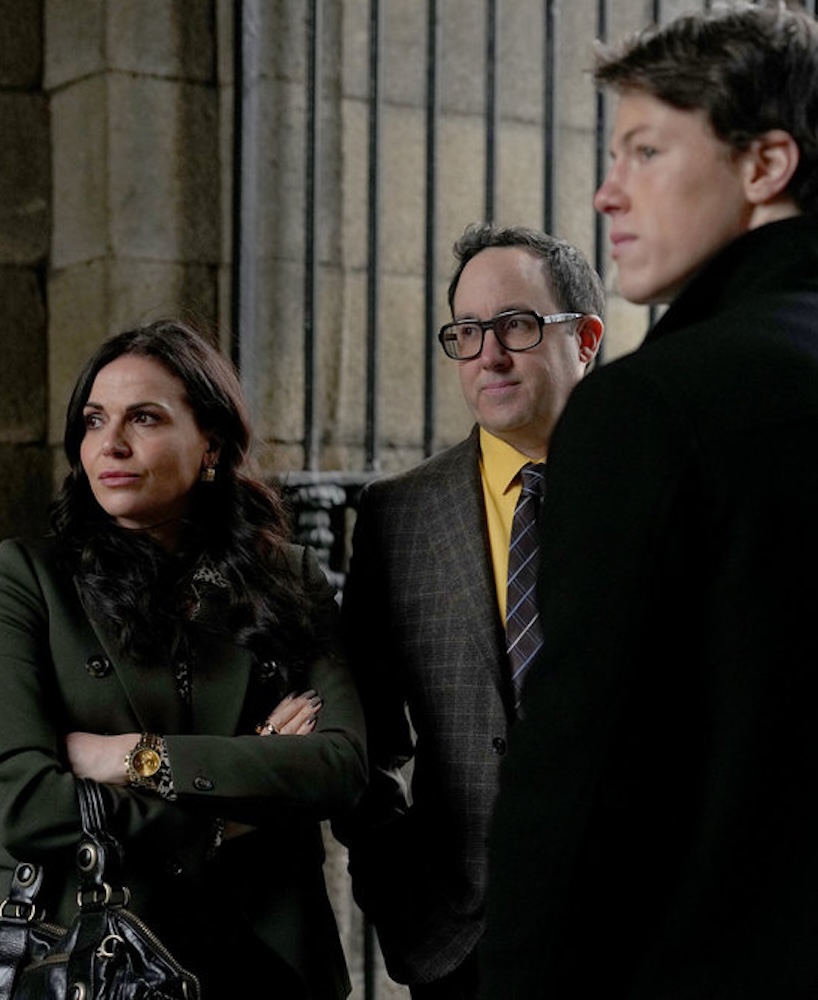
But the laws that allowed the evil insurance company to skirt justice in the novel and the film have been corrected (maybe in part to the spotlight Grisham shone on them in his books), so when USA Network premiered a series based on the hard-luck legal life of Rudy Baylor, they had to take a different tack.
In finding their story, showrunners Jason Richman and Michael Seitzman build a new plot on the bones of Grisham’s work that supersedes and improves on the source material. (Seriously, fight me on this.)
In 2026, insurance companies not paying out for legitimate hospital care is a jaded and unfortunate given. A revelation that might’ve sparked outrage in 1997 wouldn’t even raise an eyebrow today.
Making It Rain
To capture interest and poke at modern sensibilities, Richman and Seitzman set Rudy up to take on the monster law firm Tinley Britt over the cover-up of a serial killer nurse murdering patients in hospitals overseen by Great Benefit.
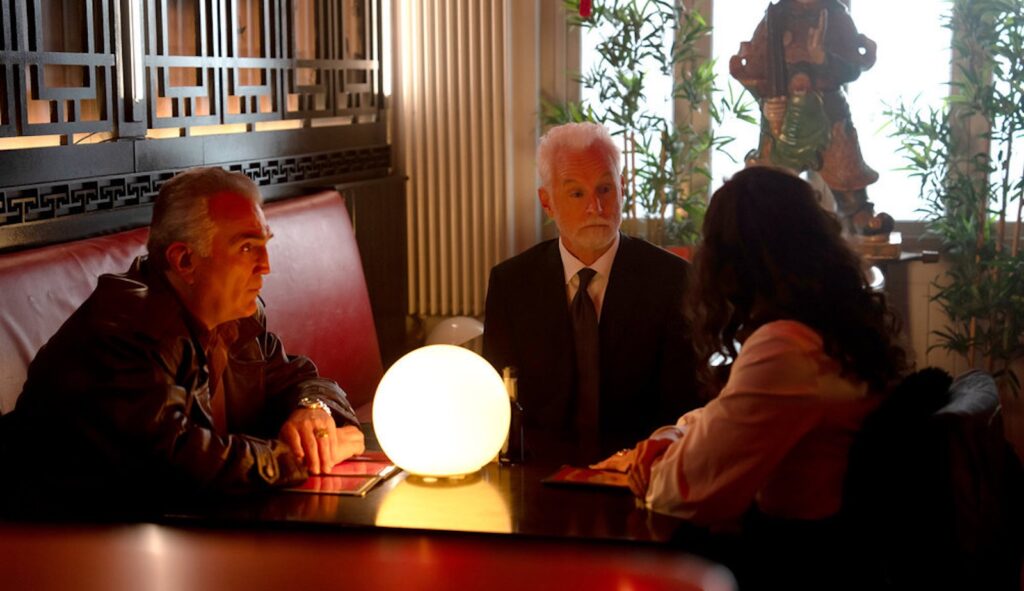
And then they stack the deck with entertaining and thrilling characters, plot twists, and backstory. Once again, the television format gives them the time and space to widen the lens, shading in the corners of context and motivation.
The Rainmaker Season 1 unfolded with elegance and precision, drawing in an audience big enough to justify a renewal order.
I credit the care and attention the showrunner gave to shaping the story and its characters, raising the stakes with the invention of Rudy’s girlfriend, Sarah, a clever and appealing cautionary tale, providing believable insights into the workings of Tinley Britt.
When her and Rudy’s career paths diverge — but their legal activities stay intertwined — viewers got front row seats to the very different ascensions of two brilliant young lawyers. Best two-for-one deal in recent memory.
And TV series can leave tantalizing future opportunities dangling. Just because Rudy won this round, it doesn’t sink Sarah. Tinley Britt is left licking its wounds, but she’s standing tall in her corner office when the credits roll on Season 1.

Source Correction
The show’s shining capstone is that it rectifies the most egregious subplot in the novel and the movie: Rudy’s romantic involvement with Kelly Riker.
In no world is it okay for a basic stranger to bust into an abusive relationship, fight the husband, and immediately dive into an intimate relationship with the battered wife.
It wasn’t okay in 1995 when the book was written. Also not okay in 1997 when she was played by Claire Danes. Nope. Nyet. Not cool. But it was accepted back then.
Today, we recognize that victims of domestic abuse need time and space to heal from their trauma. Robyn Cara‘s Kelly got that, and that’s a huge acknowledgment.
Yes, maybe if they remade The Rainmaker today as a film, they would’ve fixed that, too. But they probably wouldn’t have had the leeway to establish the reason Rudy feels so strongly about helping Kelly is his own mother’s involvement with a violent partner.
What Show Will Be Next To Prove Me Right?
The most anticipated series to go toe-to-toe with its movie predecessor is probably the HBO adaptation of Harry Potter, set to premiere its eight-episode first season on Christmas Day.
I personally won’t be giving it any air, but I predict those who love it will love it a lot.
But before that, Apple TV is coming at us with its take on Cape Fear, premiering June 5, starring Amy Adams, Javier Bardem, and Patrick Wilson. Considering how freaky the 1991 film was, that’s going to be a proper thriller of a series.
Here’s your chance, Fanatics!
Am I on point or way off base? Be honest, has there ever been a time when the movie told a better story than a corresponding TV series? Even going old school with MASH and Fame, I cannot think of a single instance. But I’m willing to be convinced.
Whether you’re with me or not, hit the comments with your thoughts and feedback! Let’s talk!
-

What’s ahead in the final two episodes of 9-1-1 Season 9? We got some answers from the cast during the RescueVerse convention, so come check it out!
-

Ever been to a fan convention? We were on the ground at RescueVerse: A Salute to TV’s First Responders, and we’ll tell you all about it here!
-

McGee would make the best Director of NCIS on the series. If it can’t be him, we have seven other suggestions from the NCISverse.
-

While we’re relieved Will Trent Season 4 Episode 16 respectfully honored Amanda, I’m worried about Will’s grief. Our review!
-

Sullivan’s Crossing Season 4 Episode 1 wrote out Scott Paterson’s Sully, and it was abysmal. Let’s discuss!
-

The Boys strikes gold with a very different episode in Season 5 Episode 4 as Homelander ascends while everyone channels hate. Our deep dive!
TV Fanatic is searching for passionate contributors to share their voices across various article types. Think you have what it takes to be a TV Fanatic?Click herefor more information and next steps.