
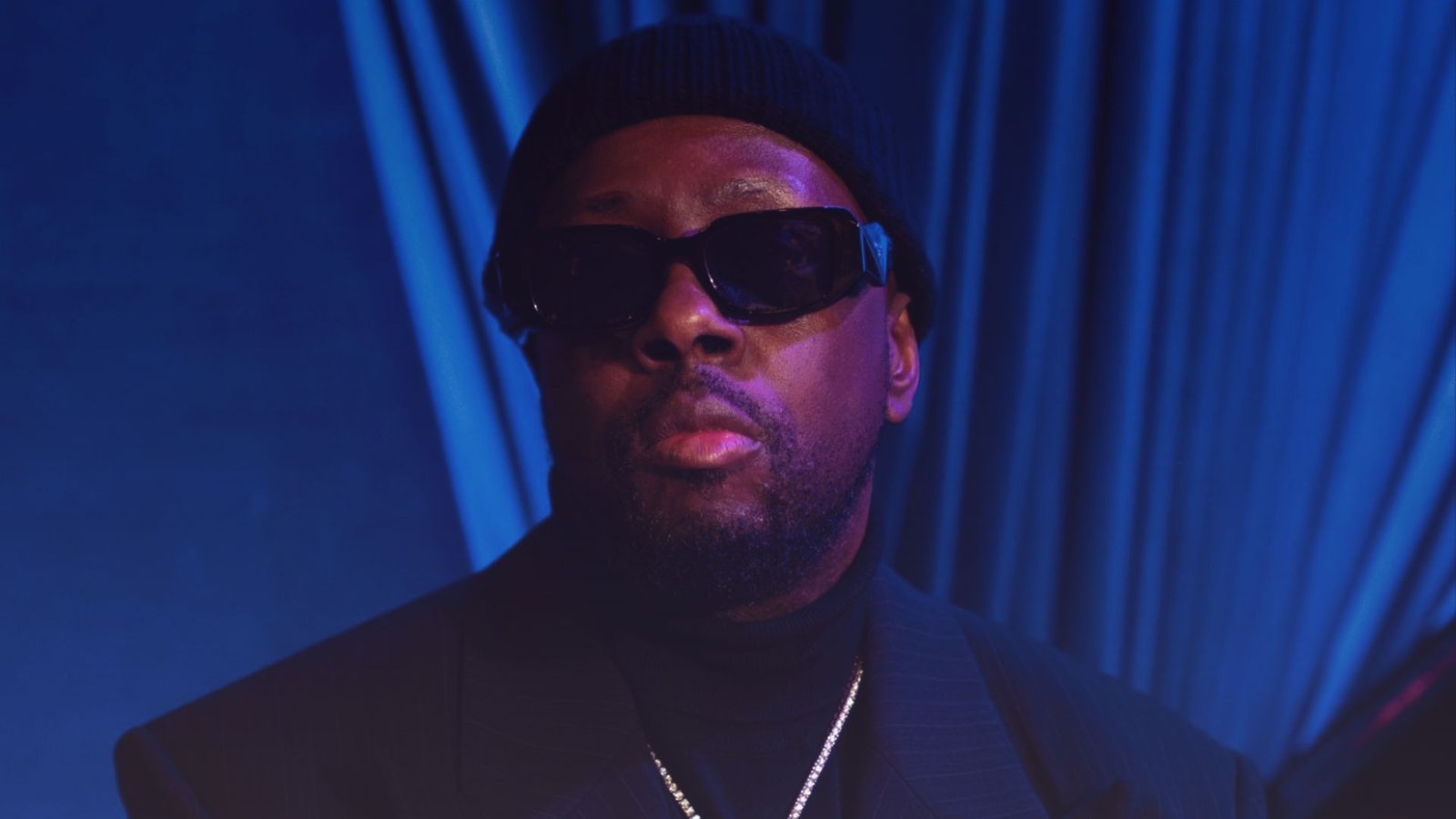
Wyclef Jean has today dropped the second entry in his namesake homage to Quincy Jones titled ‘Q Theory – Quantum Leap Vol.2’, featuring Robert Glasper, Yussef Dayes, Theo Croker, Harvey Mason among others.
By the time an artist has been around long enough to collect a few decades of musical mileage, the usual expectation is that they will either coast on nostalgia or announce their latest reinvention with the subtlety of a marching band crashing through your living room. Wyclef Jean has apparently chosen option three, which is to ignore the rulebook entirely. ‘Q Theory: Quantum Leap, Vol. 2’ finds Jean diving headfirst into jazz, fusion, Caribbean rhythm, African influences, Latin textures and a sprawling global vocabulary that makes the phrase musical adventure sound almost embarrassingly inadequate. This is not a veteran artist desperately trying to prove he still has something to say. This is an artist who clearly has far too much to say and has decided that nine tracks probably will not be enough.
The album gets its magic from the way its influences collide without sounding like a musical committee meeting. Rocinha opens the door with a cinematic sense of movement, while Lady Havana brings a wonderfully restless energy that feels equally comfortable in a smoky jazz room or somewhere much closer to the equator. The musicianship is formidable throughout, but Q Theory never becomes one of those records that mistakes technical ability for personality. Jean understands that virtuosity is most exciting when it serves the groove. With players such as Robert Glasper, Yussef Dayes, Theo Croker and Harvey Mason involved, the potential for instrumental showing off is obviously enormous. Thankfully, everyone seems more interested in creating a living, breathing musical conversation.
What makes Q Theory particularly satisfying is its sense of geography. The record does not merely borrow sounds from different cultures and stick them together like musical refrigerator magnets. It feels interested in the history and spirit behind those sounds. Caribbean rhythms, Latin American colors, African influences and jazz traditions continually push against each other, creating something that feels both deeply rooted and gloriously unpredictable. Silk & Sand has that elusive quality where the arrangement seems to know exactly where it is going while simultaneously giving the musicians enough room to wander off and discover something better. Apparently, getting lost can still be a perfectly respectable compositional technique.
French Quarter and Pegasus further demonstrate just how naturally Jean handles this material. The former carries a relaxed sophistication that gives the album another shade of nighttime cool, while the latter feels more airborne and exploratory. It is the kind of sequencing that rewards listeners who actually pay attention to albums as albums, rather than treating them as nine interchangeable opportunities to check their notifications. Q Theory moves, breathes and changes temperature. It has quiet confidence without becoming precious about it, and that balance is increasingly rare in an era when every adventurous record seems determined to explain its own importance before the first chorus arrives.
Then there is the larger idea behind the project, and this is where Q Theory rises above being merely an impressive jazz influenced album. Jean is using music as a meeting place. That concept could easily have resulted in something painfully earnest, but the music saves it from that fate because the collaboration feels genuine rather than decorative. Farafina, Sugarcane & Watermelon and Harlem Nights each add another piece to the puzzle, while Toussaint Louverture brings the journey back toward Haitian history and cultural identity with a sense of purpose that never requires a lecture. The record understands that cultural exchange is most powerful when people actually listen to one another. Imagine that. Revolutionary stuff.
‘Q Theory: Quantum Leap, Vol. 2’ ultimately feels like Wyclef Jean doing what he has always done best, refusing to accept that musical borders are particularly useful things. The difference is that this time he has built the entire landscape around that philosophy, inviting an extraordinary cast of musicians to help turn it into sound. The result is sophisticated without being stuffy, worldly without being touristy, and ambitious without collapsing under the weight of its own ambition. In a career already defined by genre crossing, Jean somehow finds another door to kick open. Q Theory is not simply a jazz detour. It is another reminder that Wyclef Jean remains most interesting when nobody has bothered to tell him what he is supposed to sound like.
“This is my first movement in the birth of “Rara Jazz”, it draws inspiration from the spirit of Brazil’s most iconic favela, the harmonic innovations of John Coltrane, and the boundless creativity of Herbie Hancock. A fearless fusion of jazz, the Caribbean, Brazil, Africa, and the Americas. Welcome to Rara Jazz.”
Wyclef Jean
About ‘Q Theory’
Blending the vibrant spirit of the Caribbean with the fearless improvisation of jazz fusion, and inspired by the rich cultural heritage of Hispaniola, this project lets the music tell the story. From the rhythms of America and the Americas the Caribbean, Latin America, Africa, and the Middle East this is a soulful, cinematic journey that celebrates culture, collaboration, and musical freedom, reimagining jazz through the boundless creative spirit of Wyclef Jean.
Featuring an extraordinary lineup of legendary masters and visionary new voices, including Robert Glasper, Harvey Mason, Yussef Dayes, Theo Croker, Elena Pinderhughes, Niia, Weedie Braimah, Axel Tosca, Godwin Louis, Jean Caze, Mushy G. Widmaier, Yissell Sanchez, and other exceptional collaborators from around the world.
More than an album, ‘Q Theory’ is a philosophy. It is the belief that music can unite cultures, transcend borders, and remind us that beyond language and geography, humanity has always shared the same rhythm. Welcome to the world of Rara Jazz.
Wyclef’s ambitious Quantum Leap project will see the prolific songwriter, producer and performer release seven albums consecutively over the next year. Each album has seven tracks, narrowing in on a genre he has mastered over his three decade and counting career. Leaping from Hip Hop to Jazz, and on to Reggae, Gospel, Country, R&B, and celebrating global beats like Haitian Kompa and beyond. Much like his globally celebrated and 3x Grammy Nominated debut album The Carnival. Just a year ahead of the 30th anniversary of the album’s anniversary, Wyclef’s indelible impact on the music industry continues to be a force. The Carnival is widely regarded as an early triumph of a more global hip-hop sound. Before cross-cultural fusion became commonplace as it is today, Wyclef seamlessly blended Latin, Caribbean, Country and folk influences into a single groundbreaking record.
This winter also marked a milestone anniversary for the Fugees seminal album The Score, celebrating 30 years of one of the most influential and groundbreaking hip-hop albums of all time. This year has seen Wyclef and his Fugees co-founder Ms. Lauryn Hill reunited in their incomparable creative union. They’ve recently performed together at Ms. Hill’s music festival Diaspora Calling!, Global Citizen Festival Rio, The 2026 GRAMMY Awards, SNL50, and they will soon take New York City by storm at Central Park’s Global Citizen Festival, alongside Lenny Kravitz, John Legend and more.
As a composer, writer and producer his legacy is easily tracked among his countless hits for legends like Shakira, Whitney Houston, Santana, Destiny’s Child, Mary J. Blige, Lil Wayne, T.I., Fugees and many more. His ability to both transcend and blend global genres and masterful use of instrumentation make him a timeless creator even among his contemporaries. In the past year alone he’s been sampled by Ayra Starr, will.i.am, DJ Mustard, Stormzy, Central Cee, G Herbo and more. Herbo’s recent hit “Emergency” stars Wyclef while sampling his hit “911” from his second solo album The Ecleftic.
About Wyclef Jean
Wyclef Jean is a Grammy Award-winning artist, producer, and composer with over three decades of pioneering influence in the music industry and culture. As a founding member of the Fugees, their 1996 album “The Score” achieved monumental global and chart topping success, in addition to two Grammy Awards and a nomination for Album of the Year. He has released eight solo albums, including “The Carnival,” which sold nearly nine million copies worldwide and was Grammy Nominated. As a producer and writer, he is responsible for hits like “Hips Don’t Lie” (Shakira), “Maria Maria” (Santana) and more. In 2020, Wyclef launched the podcast “RunThatBack”.
As a leader in music tech he co-founded SodoMoodLab, composing music for Showtime’s “The Chi,” is Chief Creative Officer of OpenWav, and a consultant for Google DeepMind, where he focuses on AI technology. He has joined Circle Internet Group (NYSE: CRCL) as Global Culture Advisor, partnering to transform financial technology into a cultural bridge between people, purpose, and prosperity. As a philanthropist, he is deeply committed to honoring his home country of Haiti, recently sponsoring and mentoring Haitian students in a robotics program that achieved global accolades. He is a Global Ambassador for Global Citizen, is on the National Advisory Board for Music Will, and was honored with their 2025 Innovator Award. He remains a dynamic cultural force, seamlessly integrating music, education, and technology to drive meaningful social change. His ambitious, career spanning, seven album project ‘Quantum Leap’ is due out this year.
LINKS:
https://www.instagram.com/wyclefjean/
https://www.facebook.com/Wyclef/
https://www.youtube.com/user/wyclef
https://open.spotify.com/artist/7aBzpmFXB4WWpPl2F7RjBe
https://www.youtube.com/@wyclef